

/ News, Research / Catherine Weyer
AI helps to evaluate skin lesions in rare disease more accurately (Hartman Lab)
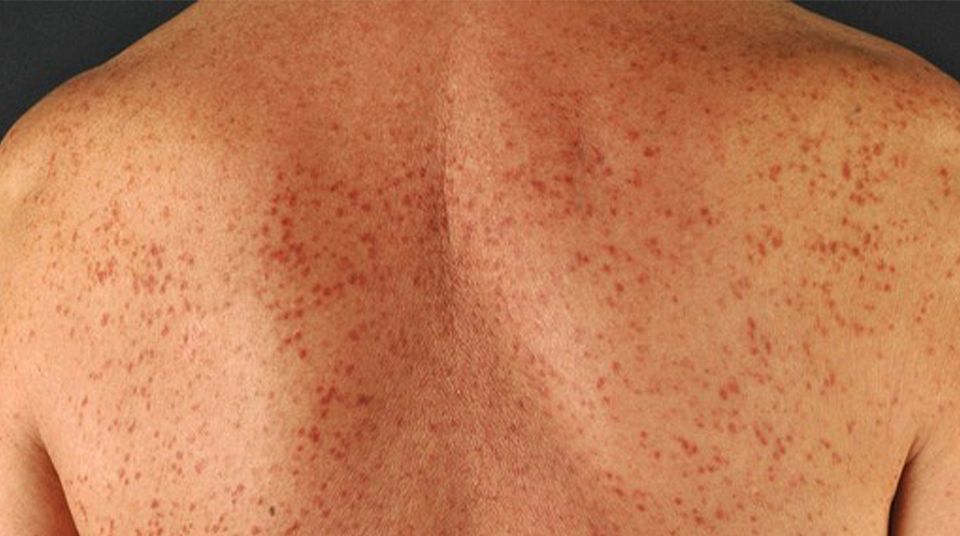
There is a promising new drug for the rare disease mastocytosis, which is associated with skin lesions, among other things. Researchers at the University of Basel have now been able to use artificial intelligence to quantitatively measure for the first time the extent to which it reduces skin lesions.
Like the burning and itching you feel when you touch a nettle: That is how allergist and dermatologist Professor Karin Hartmann describes the unpleasant feeling her mastocytosis patients experience every day. In this disease, mast cells expand in an uncontrolled manner. These immune cells release substances such as histamine, which are also secreted during allergic reactions. This can lead to itching, hives and brown skin lesions – as well as many complaints that cannot be seen on the skin, such as anaphylaxis, abdominal pain, anemia or weight loss.
The study on the skin lesions was initiated by the University of Basel and conducted in collaboration with an international research consortium and Blueprint Medicines. It was also funded by Blueprint Medicines.
Skin lesions become smaller and less noticeable
Karin Hartmann, Professor of Allergy and Research Group Leader at the Department of Clinical Research and the Department of Biomedicine, as well as Head of the Division of Allergy and Deputy Head of the Department of Dermatology at the University Hospital Basel, worked with international colleagues to investigate how the drug avapritinib can reduce skin lesions in mastocytosis.
Their results have been reported in the Journal of the American Academy of Dermatology. For the study, they investigated the changes in the extent of the skin lesion area over a period of 24 weeks. The results are clear: The extent of the skin lesions became smaller, their color more normalized and the number of mast cells in the skin also decreased.
Regular photographs under standardized conditions
The researchers asked the 212 test subjects about qualitative changes such as complaints and quality of life, examined the number of mast cells using biopsies, and analyzed the size and color of the skin lesions. Artificial intelligence was used for the latter analysis. 111 of the participants had regular photographs taken of different parts of the body according to a standardized scheme.
The images were always taken against the same background, at the same distance to the camera and under the same lighting conditions. This resulted in comparable images over the entire study period. Computer specialists then developed a program that automatically recognizes and highlights mastocytosis-specific skin lesions.
Based on this, the extent of the lesion area was able to be calculated in relation to the total skin area. In concrete terms, this means that the area of the skin lesions decreased by an average of 36.6% in the participants who received the medication.
Feedback loop with dermatologists
However, it was not entirely possible without specialist expertise: Hartmann and three other experienced dermatologists accompanied the process and gave feedback on the highlighted skin areas. “It was sometimes difficult for the AI to tell whether it was dealing with a mole or one of the typical brow skin lesions,” says Hartmann.
For her, this method, which involves experienced doctors working together with artificial intelligence, is groundbreaking: “It enables a much more precise assessment,” says Hartmann. It is particularly because the exact extent of such small lesions is difficult to reliably assess with the human eye that artificial intelligence can play to its strengths here.
Looking with all the senses
At the moment, however, it cannot replace human expertise, as Hartmann says: “In dermatology, prospective specialists learn to look with all their senses. We also touch the skin to detect elevated lesions, for example. AI cannot do that for us yet.” However, it can prove a valuable addition, particularly in clinical trials in which the precise quantification of skin lesions plays an important role.
Avapritinib is now approved for patients more severely affected by mastocytosis. AI could continue to help doctors assess various skin diseases in the future. “AI can help us make an initial quantitative assessment. There is certainly great potential here, particularly for clinical trials,” says the allergist.