

/ News, Research
How gut bacteria can trigger autoimmune neuroinflammation (Pröbstel Lab)
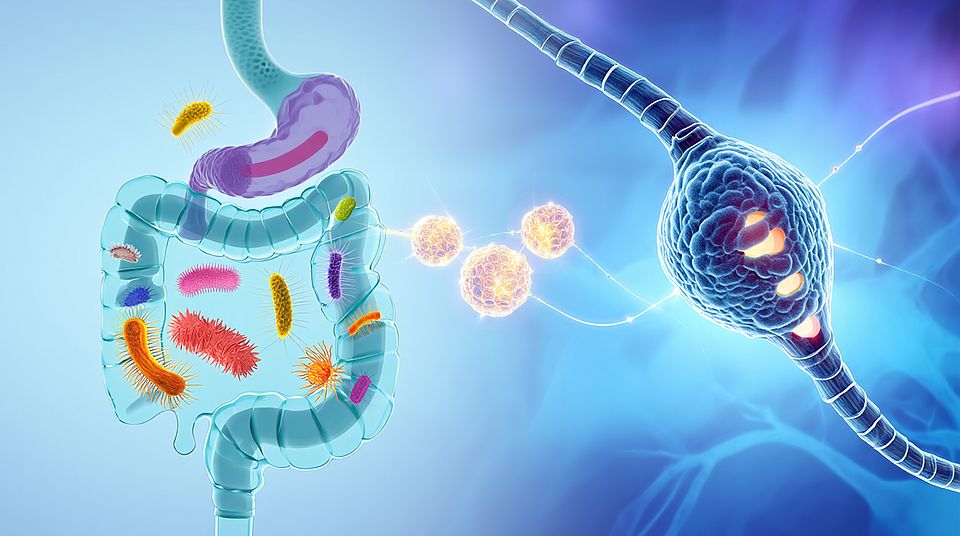
The research teams of Professor Anne-Katrin Pröbstel in Basel and Bonn have discovered how certain gut bacteria can trigger autoimmune inflammation in the brain and spinal cord. Their study, published in Gut Microbes and first-authored by Drs. Siewert and Berve, shows that when gut bacteria display a myelin antigen - an important structure of nerve fibers in the central nervous system (CNS) - they can activate harmful immune cells already in the intestine, speeding up the development of multiple sclerosis-like disease in mice.
To test this, the researchers engineered an attenuated Salmonella strain so that it carried a small piece of myelin on its surface. When mice were colonized with these myelin-expressing bacteria, they developed earlier and more severe neuroinflammation than mice given control bacteria. This happened because the engineered microbes activated myelin-specific T cells and B cells in the gut’s immune tissues, which then moved toward the CNS and contributed to disease.
Importantly, the researchers did not find signs that the bacteria themselves left the gut. Instead, the disease-driving immune activation occurred locally in gut-associated lymph nodes, from where the primed immune cells later entered the CNS. This supports the idea that the gut can act as an early training ground for autoreactive immune cells.
These findings have important implications for future microbiome-based treatments. While engineered bacteria are being explored as tools to boost immune responses in cancer therapy, this study shows that such approaches must also consider the risk of unintentionally activating autoreactive cells. At the same time, the work opens promising opportunities: by targeting or modifying specific gut bacteria, it may one day be possible to reduce harmful immune responses or to train the immune system to tolerate self-antigens in diseases like multiple sclerosis.
Overall, the study provides clear experimental evidence that gut microbes can shape autoimmune reactions in an antigen-specific way, offering new insight into how the intestinal microbiome contributes to neuroinflammation and how it might be used for future therapies.
Original Publication