

/ News, Research / Martina Konantz
Single-amino acid variants in target epitopes can confer resistance to antibody-based therapies (Jeker Lab)
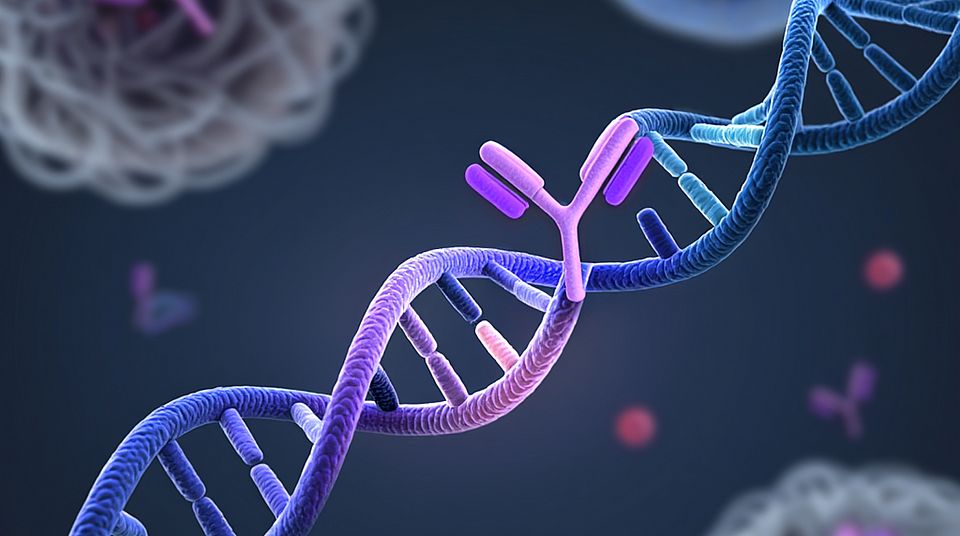
A research team led by Prof. Dr. Lukas Jeker and Dr. Rosalba Lepore have uncovered a surprising blind spot in modern immunotherapy: naturally occurring genetic variations in human proteins can block therapeutic antibodies from binding — meaning that some of today’s most widely used cancer and immune-targeting drugs may be ineffective before treatment even begins. This breakthrough was made possible through a close collaboration between the DBM, the Biozentrum and the SIB Swiss Institute of Bioinformatics, bringing together computational and experimental expertise from the Schwede and Jeker labs. By combining advanced structural modeling with cutting-edge wet-lab validation, co-first authors Dr. Romina Marone, Dr. Erblin Asllanaj and team revealed how subtle genetic differences can dramatically influence drug efficacy — paving the way for more personalized and effective antibody-based therapies in the future.
The team analyzed 87 approved or clinical-stage antibodies, mapping more than 25,000 human variants onto 3D structures of antibody–antigen complexes. Computational modelling predicted which substitutions disrupt binding, and 43 representative variants were experimentally tested. By engineering selected variants in human cell systems, they confirmed that several naturally occurring substitutions abolish antibody binding and, in some cases, create complete resistance to antibody–based therapy — a phenomenon previously described only in isolated cases.
Four major therapeutic antigens — CD20, CD38, PD-1, and HER-2 — were examined in detail. For CD20, a single variant (N171Y) completely abolished binding of the therapeutic monoclonal antibody rituximab while leaving ofatumumab binding intact, illustrating drug-specific resistance within the same target. In CD38, distinct variants selectively impaired either daratumumab or isatuximab, suggesting that genetic testing could directly inform antibody choice in multiple myeloma. In the checkpoint inhibitor system, several PD-1 variants abolished pembrolizumab binding but not nivolumab binding, offering a potential explanation for pembrolizumab non-responders who respond to nivolumab. Finally, the naturally occurring HER-2 P594H variant completely blocked trastuzumab binding and conferred full resistance to the clinical antibody-drug conjugates (ADCs) Kadcyla and Enhertu, while pertuzumab remained effective — a finding with immediate therapeutic relevance for HER-2–positive cancers.
Why does this matter? These variants are germline, meaning resistance can exist even before treatment begins. ADCs add particular risk: when an antibody can’t bind its target, the cytotoxic payload may circulate systemically instead of reaching the tumor. In many cases, alternative antibodies remain effective — identifying the specific variant involved can serve to optimize the choice among them. And finally, some variants are globally rare yet common in certain populations, underscoring the need for diverse genomic data in particular from currently underrepresented populations.
Together, these findings reveal that primary resistance can be encoded in a patient’s genome long before therapy begins. Incorporating genetic screening into clinical decision-making could help physicians choose the most effective antibody therapy from the start and avoid ineffective or harmful treatments.