

/ News, Research / Martina Konantz
New immunoconjugate enhances effector T cell-driven anti-tumor responses (Zippelius Lab)
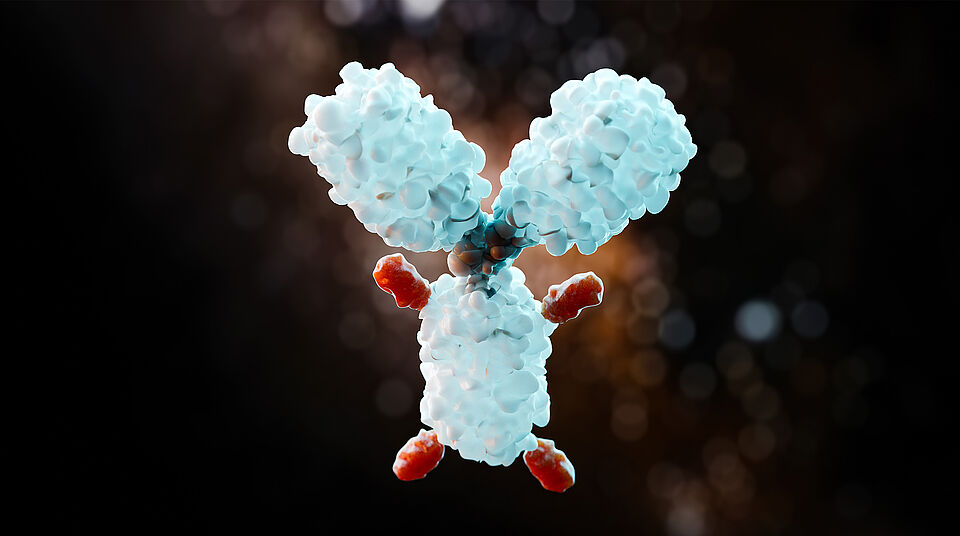
Immune checkpoint inhibitors have transformed cancer therapy, yet many patients either fail to respond or eventually develop resistance. Researchers are therefore exploring new ways to selectively strengthen anti-tumor immune responses while avoiding the side effects associated with systemic immune stimulation. One promising strategy is the use of immunocytokines, which are therapeutic molecules that combine checkpoint blockade with targeted delivery of immune-activating cytokines directly to immune cells localized within tumors. However, identifying the optimal cytokine and achieving selective activation within the tumor microenvironment has remained a major challenge.
A new study by Nicole Oelgarth and colleagues from the Cancer Immunology group led by Prof. Alfred Zippelius, in close collaboration with Bright Peak Therapeutics, published in the Journal for ImmunoTherapy of Cancer, introduces a novel immunocytokine that combines programmed cell death protein (PD-1) blockade with targeted delivery of interleukin-18 (IL-18), a potent immune-stimulating cytokine known to enhance effector function.
Using preclinical mouse models, human tumor samples, and analyses of single-cell sequencing datasets from multiple human cancers, the researchers investigated how this next-generation immunocytokine stimulates anti-tumor immunity.
The study uncovered several important findings:
- The researchers describe a first-in-class PD-1-targeted IL-18 immunoconjugate that enhances intratumoral T-cell activity in human PD-1 knock-in mice.
- The therapy elicited anti-tumor immunity by activating cytotoxic CD8+ T cells and Th1-like CD4+ T cells, depending on the tumor context.
- Treatment generated a strong inflammatory response within tumors characterized by increased IFN-γ production while limiting systemic cytokine activation.
- Importantly, analogous PD-1+ IL-18 receptor-positive T-cell populations were identified across multiple human cancer types, supporting the translational potential of this therapeutic approach.
These findings demonstrate that combining checkpoint inhibition with localized cytokine delivery can enhance T cell-driven anti-tumor immunity. By directing IL-18 to intratumoral PD-1+ T cells, this strategy may address important limitations of conventional cytokine therapy while preserving potent immune activation within the tumor.
The study provides a mechanistic rationale for the further translational evaluation of PD-1-targeted IL-18 immunocytokines and highlights a potential strategy for enhancing anti-tumor immunity in patients with solid cancers.