

/ News, Research / Martina Konantz
New Insights Into Natural Killer Cells Could Advance Lung Cancer Immunotherapy (Zippelius Lab)
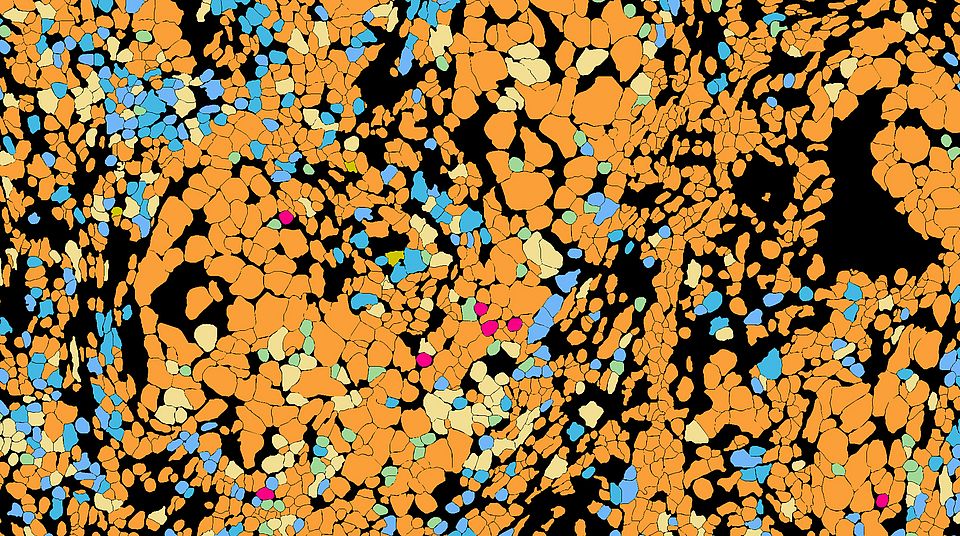
A hidden reservoir of potent immune cells long thought to be disabled within tumors may hold the key to more effective lung cancer treatment.
Immunotherapy has transformed the treatment of lung cancer, yet many patients still fail to achieve durable responses. Researchers and clinicians are therefore searching for new ways to harness the immune system to fight cancer more effectively. One promising avenue involves natural killer (NK) cells - immune cells that can directly recognize and destroy tumor cells. However, within tumors, NK cells often become impaired and lose their anti-cancer activity. Currently, there is limited knowledge regarding the functional diversity of NK cells within tumor tissue and the extent to which NK-targeted strategies might overcome this impairment.
A New Map of the Tumor Immune Landscape
Now, a new study from Clara Serger and colleagues in the Cancer Immunology group led by Prof. Alfred Zippelius, published in Science Immunology, provides important new insights into how NK cells behave inside lung tumors and how they might be therapeutically reactivated. The work marks a significant step forward in understanding why some immune cells retain their fighting power even in the hostile environment of a tumor.
Using advanced single-cell sequencing technologies, the researchers created a detailed molecular map of NK cells in untreated non-small cell lung cancer, the most common form of lung cancer. By combining genomic analyses with patient-derived tumor models and functional experiments, the team identified previously unrecognized NK cell populations within tumors and uncovered how these cells develop and function in the tumor microenvironment.
"What struck us was that two distinct NK cell populations within the tumors, despite showing clear signs of dysfunction, unexpectedly retained strong tumor-killing potential," said Dr. Clara Serger, first author of the study. They also discovered that inflammatory signals inside tumors drive NK cells into a highly active CD39+ state associated with strong immune activation programs. Most importantly, the study revealed that these CD39+ NK cells are the dominant tumor-killing population within lung cancer and respond particularly well to blockade of the immune checkpoint receptor NKG2A - an emerging immunotherapy target currently being explored in clinical trials.
Rethinking NK Cell Potential
“These findings challenge the prevailing view that NK cells within tumors are simply exhausted bystanders.” said Prof. Alfred Zippelius, senior author of the study. The findings suggest that NK cells inside tumors are far more dynamic and therapeutically relevant than previously appreciated. Rather than being permanently dysfunctional, certain NK cell populations retain powerful anti-tumor activity that can potentially be reactivated through targeted immunotherapy.
By providing a detailed map of NK cell states in lung cancer, the study offers an important foundation for the development of next-generation NK cell-based therapies aimed at improving outcomes for patients with lung cancer.