

/ News, Research / Martina Konantz
New insights into the cellular origin of aggressive acute myeloid leukemia (Schwaller Lab)
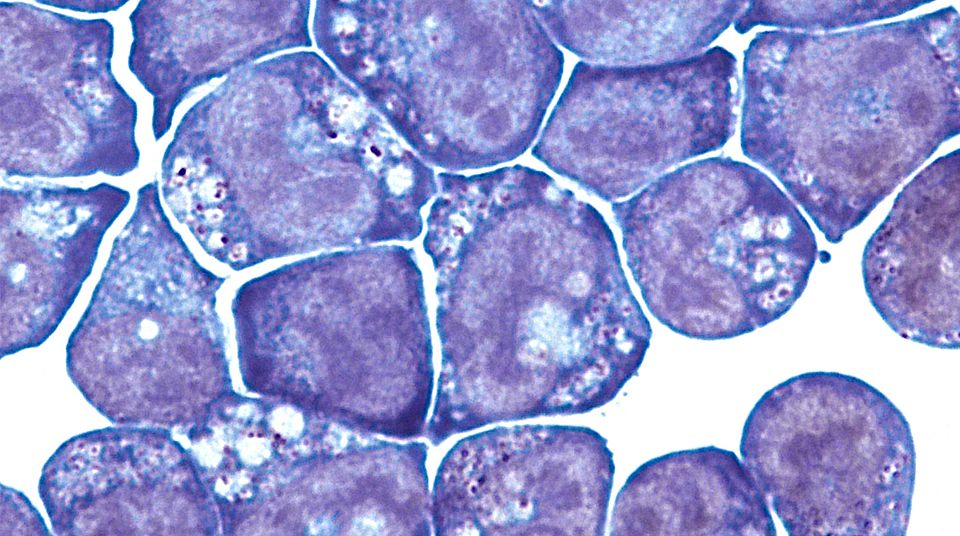
Researchers from the Schwaller lab and their collaborators have published a new study in Nature Communications that provides important insight into the origin of a highly aggressive form of acute myeloid leukemia (AML). The study, led by co–first authors Hugues-Étienne Châtel-Soulet and Sabine Juge, combines advanced mouse models with human leukemia cell lines to understand why certain leukemias are associated with particularly poor clinical outcome. The Schwaller lab has a long-standing interest in the biology of fusion oncogenes in AML and in how these genetic alterations interact with specific cells of the hematopoietic system. In this work, the authors focus on AML that carry rearrangements of the KMT2A gene and expressing high levels of the transcription factor EVI1, a well-known marker of aggressive disease.
Acute myeloid leukemia with KMT2A rearrangements represents a biologically diverse but clinically challenging group of leukemias. A subset of these cases expresses high levels of EVI1, which is strongly associated with poor prognosis, yet the cellular origin of these leukemias has remained incompletely understood. In this study, the authors introduced an Evi1 fluorescent reporter allele into an inducible KMT2A-MLLT3 mouse model to trace Evi1-expressing cells during leukemia initiation. They demonstrate that short-term exposure to the cytokine thrombopoietin (TPO) selectively increases the number and cycling activity of Evi1-positive hematopoietic stem cells. When these primed stem cells express the KMT2A-MLLT3 fusion oncogene, leukemia develops faster and shows more aggressive features. Comparative gene expression analyses reveal that leukemias originating from TPO-stimulated stem cells share a stem cell–like transcriptional signature with human EVI1-positive AML. Several of these genes are linked to poor patient outcome and are functionally required for leukemia cell growth in human cell lines. Together, the results identify a link between cytokine signaling, stem cell origin, and aggressive leukemia biology.
Advancing our understanding of AML origins
AML is a genetically heterogeneous disease, and patients with KMT2A rearrangements and high EVI1 expression belong to the group with the most unfavorable prognosis. These leukemias often show resistance to standard chemotherapy, and relapse rates remain high. Understanding why these leukemias arise and what distinguishes them at a biological level is therefore of major importance. The present study addresses a key open question in the field, namely why only certain hematopoietic cells give rise to highly aggressive EVI1-positive AML. The findings indicate that external signals, such as cytokines that normally regulate blood stem cell maintenance, can transiently alter the behavior of EVI1-expressing stem cells. This altered state increases their susceptibility to malignant transformation by KMT2A fusion oncogenes. By demonstrating that leukemia aggressiveness is influenced not only by genetic lesions but also by the cellular context in which they occur, this work adds an important dimension to our understanding of AML pathogenesis. In the longer term, identifying stem cell–associated pathways that sustain aggressive leukemia may open new opportunities for therapeutic intervention. Targeting not only leukemia cells, but also origin-related programs that promote stemness and therapy resistance, could help to improve outcomes for patients with EVI1-positive AML.